

Words & Photography by Coline LeConte | Spring 2025
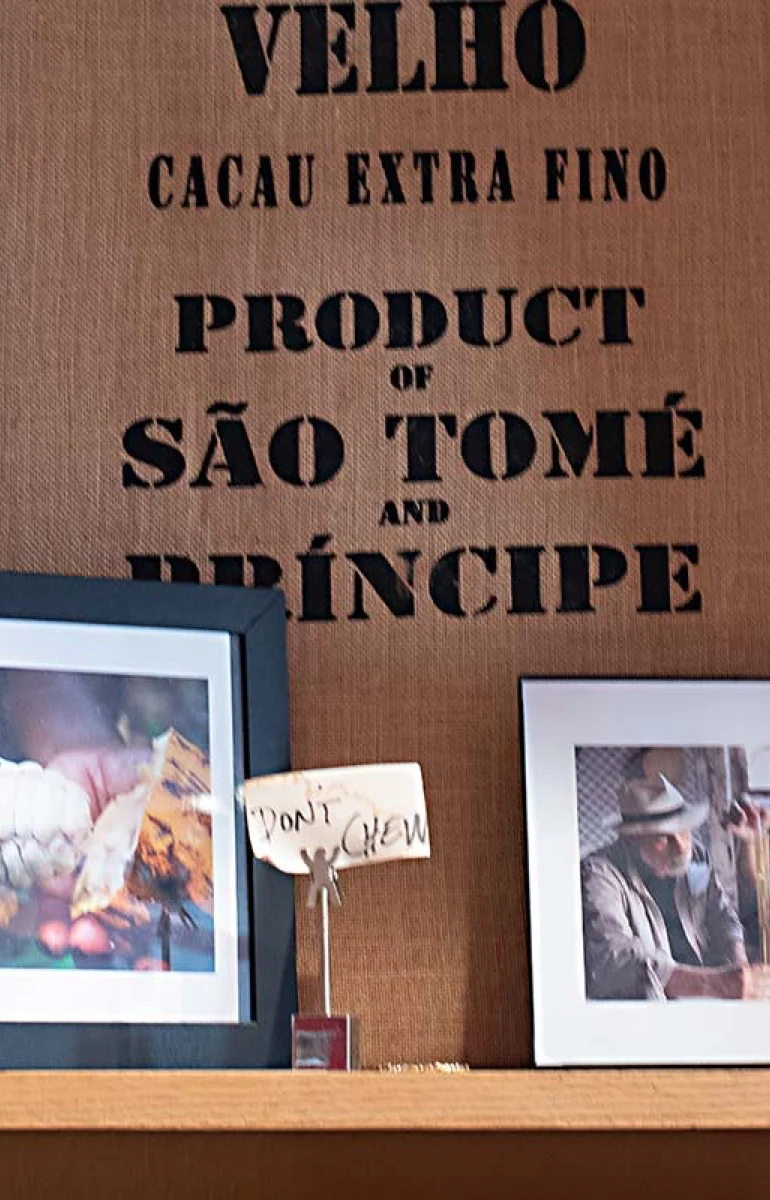
There’s a lot of flavor in one bite of chocolate. To fully appreciate it, savor it with all your senses as if you were tasting a fine wine. Panos Panagos, co-founder of Alegio Chocolaté/ Claudio Corallo in Palo Alto, says you really need to let a small bite melt on your tongue. Do not chew it. As if having a bite of chocolate isn’t joyous enough, when you have the patience to let it coat your tongue with an alchemy of flavor and texture you just might experience transcendence.
“I thought people would realize what is chocolate and what is not,” Panagos says. “But most people have absolutely no idea what chocolate is and what it can be. They confuse chocolate and candy. They interchange them,” he explains, on what he has learned since opening his business 20 years ago. Claudio Corallo chocolates are made from cacao and sugar only grown on the Cacao Islands, São Tomé and Príncipe, the second-smallest country in Africa. Every cacao bean is grown, harvested and crafted in the same place, in harmony with nature and people with organic, fair trade, sustainable and biodynamic farming practices. The differences in their various bars remain in the percentage of cacao (100% to 70%) and any additional ingredients, like ginger, Liberica coffee and white pepper. (The ginger bar was a request and a favorite of the late Steve Jobs.)
The percentage you see on a craft chocolate bar label represents the portion of ingredients derived from the original cacao, including cocoa solids and cocoa butter. However, thinking of it in the reverse may be more helpful. The leftover percentage is how much sugar, milk or other ingredients are in the bar, sometimes meaning fillers.
The bars crafted by Dandelion Chocolate, a local bean- to-bar maker with factories in San Francisco and Tokyo, are made of only two ingredients. No cocoa butter, no lecithin, no allergens. The flavor comes from the origin of the beans, or it could be said that the flavor comes from the soil in which the beans are grown. Dandelion purposefully creates these bars to express the intense flavors derived from their source.*
Guittard, an over-150-year-old family-owned company based in Burlingame, sources from more than 11 countries including Madagascar, Venezuela, Tanzania, Ecuador, Peru, Ghana, Ivory Coast, Nigeria, Cameroon, Java and Hawaii. The diversity of the cocoa is staggering, not just from the standpoint of terroir (the flavor characteristics derived from environmental factors) but also from agricultural practices and the hands-on farming, drying and fermentation.
“You can look at every flavor known to mankind and there’s a cocoa that tastes like it,” Gary Guittard emphasized at the Craft Chocolate Experience in 2020.
Dandelion’s and Guittard’s abilities to forge relationships with cacao cooperatives and farms gives the artisans who purchase chocolate from them the ability to craft their products with specific tastes.
TIME AND PIPELINE
Crafting chocolate is a time-consuming process. There are many small and unique makers who have different takes on their products.
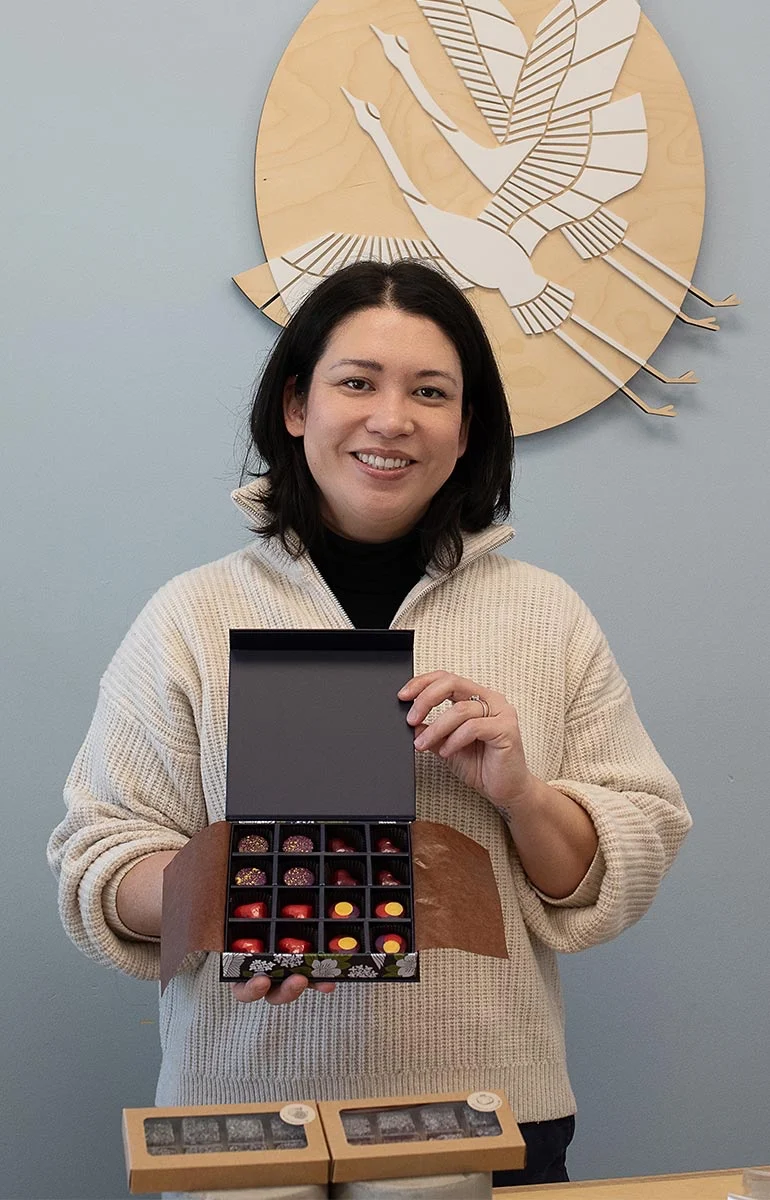
Getting chocolate to consumers is a long journey from bean to final product. Says Michiko Marron-Kibbey, founder and chocolatier at Deux Cranes, “From day one [it takes a lot] to create this magical product that everybody loves. It doesn’t just show up at your doorstep. We’re such a late part of the chain, when I get to add my flavors and make it pretty. I have so much respect for bean-to-bar makers. My passion is much more in the flavor area, post chocolate production. How much love and work goes into it before it even gets to me. It can be often overlooked and easy to forget when looking at a ▉▉▉▉▉▉▉ bar.”
She continues, “If what you want is uniformity, then you can certainly do that. But what we want as consumers is differentiation. As opposed to a bulk commodity product. We want uniqueness that comes with a more careful and intentional product.”
A confectioner is generally someone who works with sugar and makes candy. A chocolate maker is somebody who actually processes the chocolate— roasts and grinds the beans and adds sugar. A chocolatier takes the processed chocolate and makes it into something else.
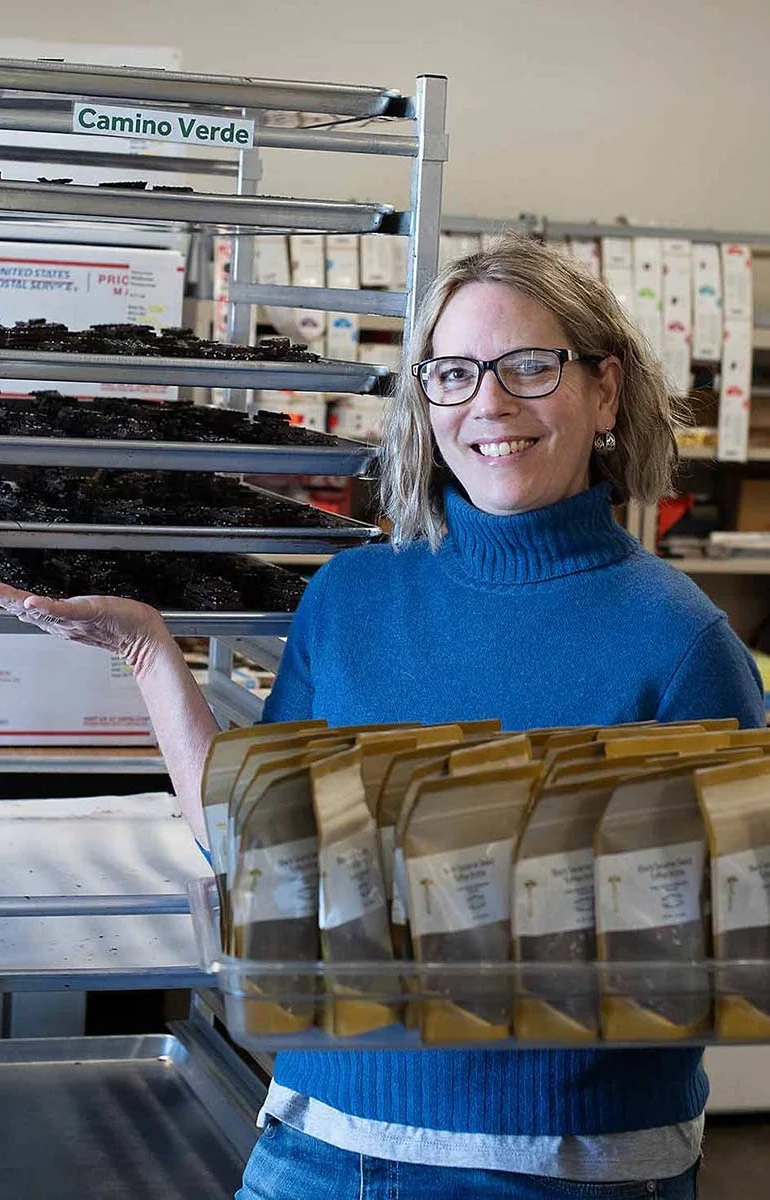
Founder and confectioner Christine Doerr of NeoCocoa started her business in 2008 making chocolate truffles. Then she started making toffee brittle. “I love those honey sesame candies in the wrappers and wanted to do something like that with chocolate,” she says. Their Toffee Nib Brittle is the interpretation of that sesame candy and it received their first Good Food Award in 2016.
Doerr then took on a second recipe, NeoCocoa’s Black Sesame Seed Toffee Brittle. Until this time she had only been using Guittard chocolate. Then after she won the Specialty Food Association’s Gold SOFI Award, Dandelion approached her to make this toffee brittle for them—using their chocolate. Doerr was hesitant; she had developed this product with the Guittard chocolate in mind. However, using Dandelion’s Camino Verde 70% from Ecuador was a success and received its own Food Food Award in 2020. “It worked,’ Doerr says. “It’s different, it really changes the candy. We do taste tests with both chocolate and it’s like 50/50 which people like!”
It’s not just that each ingredient can create a different composition to work with. “It’s very scientific,” says Marron-Kibbey. “You have to have the exact right conditions to make it really successful. Each daily environment has an effect and matters so much. And then the flavor component. Being able to pack a small punch in a small bite,” she describes.
Over 90% of chocolate sold is commodity chocolate, meaning it is an agricultural product that is traded without regard to who farmed or produced it. Do these products offer the deep flavors and characteristics that we love about chocolate when they all pretty much taste the same?
Pano Panagos enthuses, “If I was chocolate, I would be in the streets demonstrating ‘I’m chocolate, not candy!’” This is what these artisans are helping chocolate to do.