

Heirloom beans, with their beautiful colors and creamy texture, are having a local moment. As interest in plant- based eating grows, beans continue their trek to an exalted position on the plate. Their reputation as merely a cheap, belly-filling main course when you can’t afford meat is fading, and even people with the means to buy expensive proteins are choosing the humble bean, elevating them into haute cuisine with new spins on old classics.
Different from the standard supermarket bean, heirloom beans have been passed down through families, farms and communities for generations rather than bred for ease in growing and harvesting on a mass scale.
It’s no secret that beans have been catching the attention of top chefs like Thomas Keller. He came across heirloom bean purveyor Rancho Gordo at a Napa farmers market some years ago and started using their beans in his Michelin-starred restaurant The French Laundry.
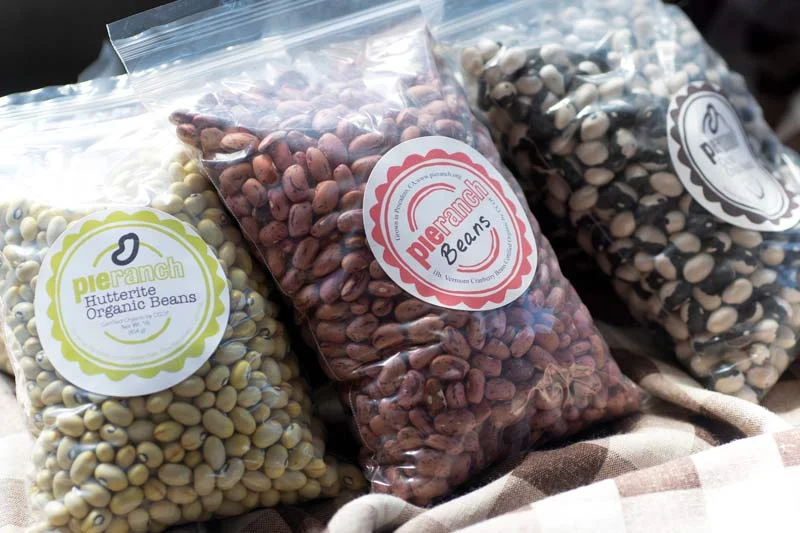
Here on the Central Coast, small farmers like Blue House Farm in San Gregorio, Iacopi Farms in Half Moon Bay and Fifth Crow Farm and Pie Ranch in Pescadero are growing dozens of varieties of heirloom beans that you can buy at their farm stands, in local farmers markets and through their websites.
Different from the standard supermarket bean, heirloom beans have been passed down through families, farms and communities for generations rather than bred for ease in growing and harvesting on a mass scale. Like any produce carefully grown on small farms, these specialty beans can cost more than standard supermarket beans. But they’re fresher and much more tender and flavorful than packaged beans, which can be 5 years old or more before they land on the grocery store shelf.
The heirloom beans grown by our neighborhood farms originated all over the world—Peru, Mexico, Maine, Virginia, the Caribbean, Africa, France, the Netherlands and beyond.

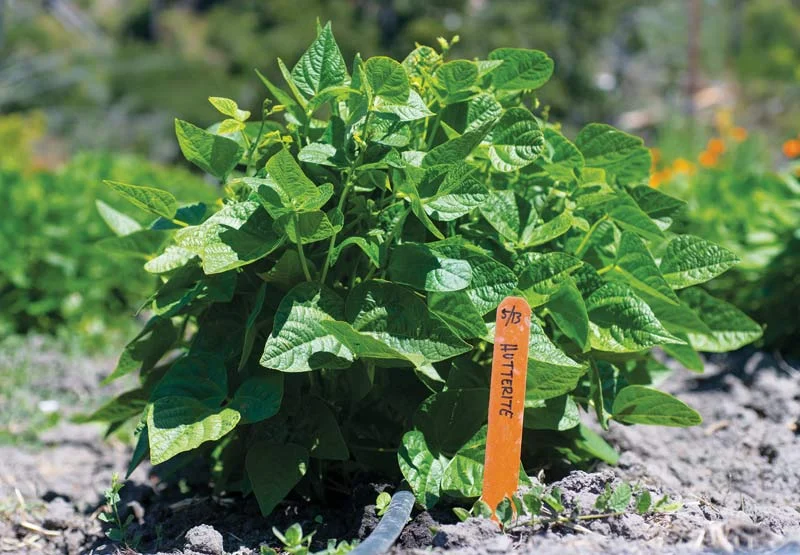
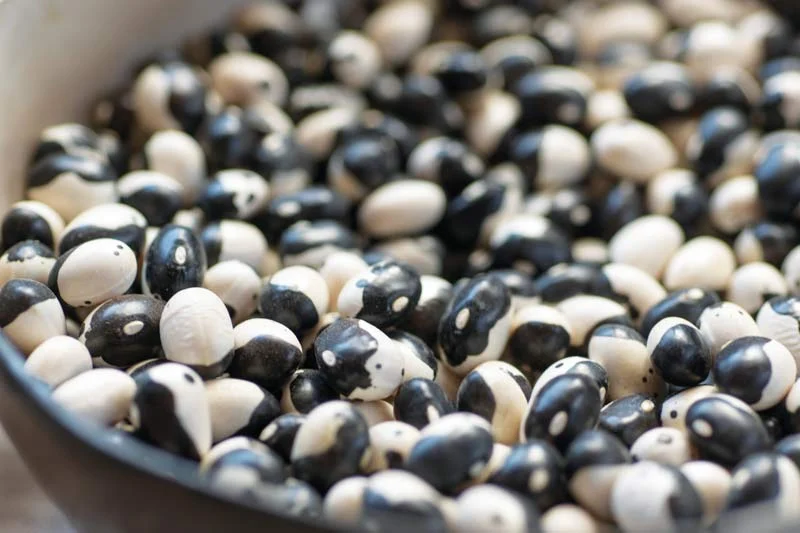
Sometimes their names hint at their vibrant colors and patterns: Tiger’s Eye, Pinto Pony, Christmas Lima. Other names reveal a bean’s origins: The Anasazi bean was first grown by the Anasazi people of the Southwest; Hutterite beans were brought to the U.S. by a religious group fleeing persecution in Eastern Europe.
When Mike Iacopi’s grandfather immigrated from Italy to Half Moon Bay in the 1930s, he brought with him bean seeds. “My family formally established our farm in 1962, and the cannellini and borlotti and Italian butter beans we grow today are descendants from those that my grandfather carried with him,” he says.
Tom Phipps, another early heirloom bean farmer in the Central Coast, started growing beans in Pescadero in the 1960s. “He sold them through Phipps Country Store and shipped them all over the country,” says Blue House Farm founder Ryan Casey. “His farm was just south of ours, and when we started we bought seeds from him.” Now Phipps’s farm has closed, but his beans live on through all of the growers in this part of Northern California.
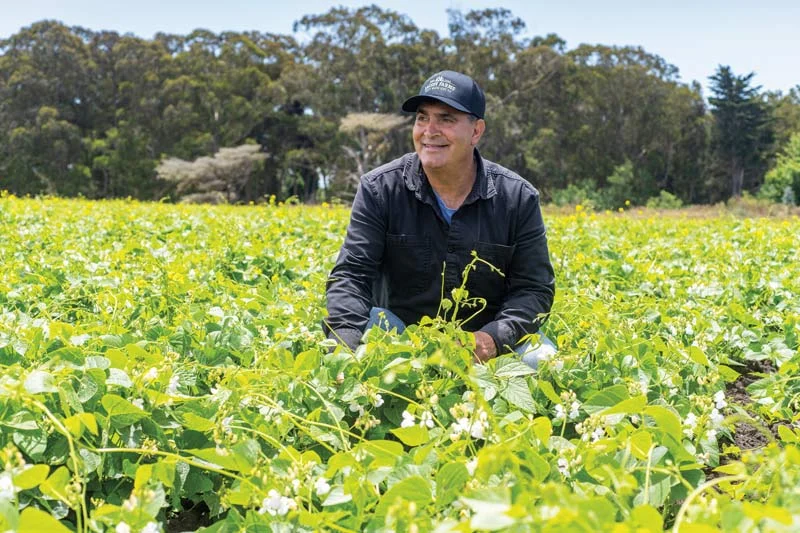
Both Blue House and Fifth Crow Farm began growing organic heirloom beans as a way to have shelf-stable items to sell through the winter and to keep their farm crews employed during the off season. “We sow in May and when the plants are 70% yellow, we pull them out and leave them on the ground until they’re completely dry. We want the beans harvested before the rains come in the fall. Then we finish cleaning and packaging the beans starting around January,” says Fifth Crow Farm co-owner Teresa Kurtak.
“Because of our wet drizzly weather, harvesting on the coast is tough,” says Iacopi. “There’s a lot of dew in the morning. The bean shells need to be dry and crisp, so we often have to wait until afternoon to start harvesting. It’s the opposite of hot places in the Central Valley or in Mexico where they often harvest in the middle of the night so that the beans don’t split in the heat of the day.”
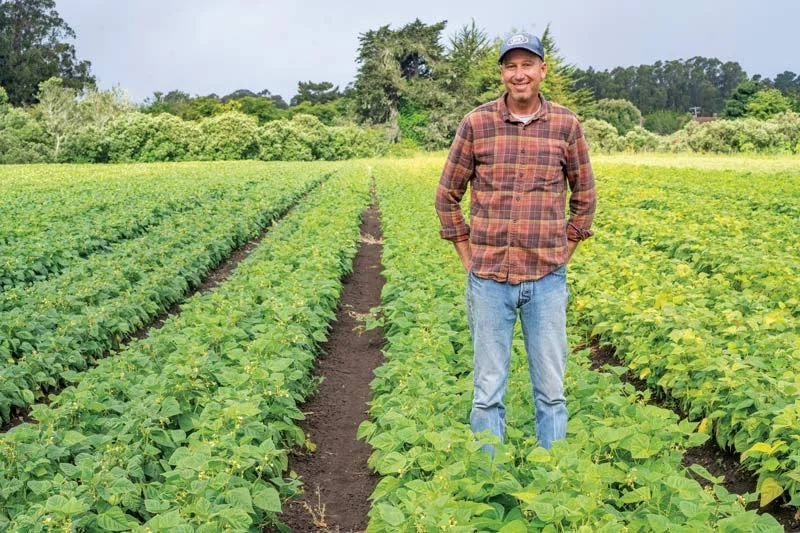
If you want to see heirloom bean harvesting in action, Pie Ranch, a nonprofit educational farm, has public work days every month and other volunteer and school programs throughout the year. If you stop by their Highway 1 farmstand to buy produce or a piece of pie, you can wander around the farm and admire the beans and other crops as they grow.
The foggy, misty climate is what may give local beans a leg up when it comes to flavor. Call it bean terroir—the salty, mineral-rich sea air and cool, moderate climate give Central Coast beans a deeper flavor and complex textures that range from velvety and silky to meaty and chewy. “Beans grown here can take longer to ripen than those grown in the much hotter climates of the Central Valley, allowing them to develop a richer flavor,” says Casey.
“Keep in mind that the cooking time for heirloom beans is shorter,” says Pie Ranch’s Tamar Ingber. “They’re fresher and younger than grocery store beans and also have a higher nutritional value. Even though beans last a long time, they do degrade over time. The Hutterite bean is my current favorite. So delicious and creamy. They’re a soft buttery yellow with a bit of green and they almost double in size as they cook.”
“If a bean is new to you, start by cooking it simply so you can really taste it,” Casey recommends. “I like my beans plain and simple, with salt and pepper. And note that some beans are suited to different recipes. If they come from Mexico or the Southwest, try using garlic and dried chilis. If they’re from the Northeast, put in a ham hock.”
“My kids love a Brazilian black bean stew called feijoada,” says Kurtak. I use our Mitla black beans and cook them with salt pork or bacon or ham, maybe some kielbasa sausage, and then sauté onions and serve it with rice. Another family favorite of ours is stewed beans with greens. I cook the beans with a little olive oil and onions or leeks and throw in collards or kale at the end for a healthy one-pot meal.”
Mike Iacopi still loves his grandfather’s Italian butter beans, which were written up in Bon Appétit magazine a few years back. He likes to sauté garlic in olive oil, then add a little tomato sauce, salt, pepper and sage leaves. To that he throws in his cooked beans and Italian sausage.
Creamy and toothsome, the humble heirloom bean can be a versatile canvas for the flavors of just about every culture. No matter what bean you try, always cook up a huge batch so you’ll have plenty to throw into soup and some to freeze for later … and then start to explore and experiment.
Where to Find Local Beans
Blue House Farm
U-Pick and Farmstand 950 La Honda Road, San Gregorio
Online farmstand: bluehousefarm.com/shop
Farmstand is open Saturday and Sunday 11am–4pm year round
The farm is also open in spring for strawberry picking and fall for a pumpkin patch.
Farmers Markets: San Mateo, San Carlos, Santa Cruz, Oakland, San Francisco
Fifth Crow Farm
3800 Cloverdale Road, Pescadero
831.600.5452
Online farmstand: fifthcrowfarm.com/farmstand
CSA boxes are also available. The farm hosts two open houses a year.
Farmers Markets: San Mateo, Palo Alto, San Francisco
Iacopi Farms
Half Moon Bay
650.726.6032
instagram.com/iacopifarms
Farmers Markets: San Mateo, Palo Alto, Los Altos, Mountain View, Saratoga, San Francisco, Marin and various East Bay locations
Pie Ranch
2080 Cabrillo Highway (Highway 1), Pescadero 650.262.1220
Online farmstand: pieranch.org/farm-stand
Farmstand is open Wednesday–Monday 11am–5pm and weekends 10am–5pm (closed Tuesdays)
The farm hosts monthly work days and barn dances and the public is always welcome to tour the farm during open days and hours.